
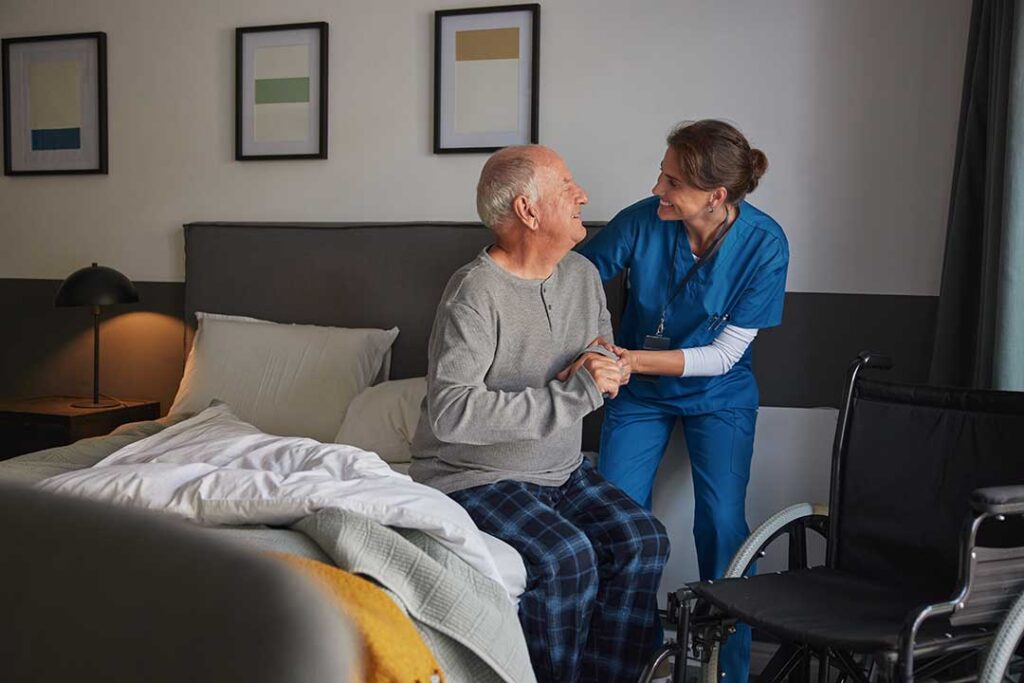
What visitor rights do assisted living residents have in Pennsylvania?
Residents of an assisted living residence generally have the right to receive visitors at any time, as long as visits do not adversely affect other residents. Pennsylvania rules also recognize a resident’s right to freely associate and communicate privately with friends, family members, physicians, attorneys, and other people. ([pacodeandbulletin.gov](https://www.pacodeandbulletin.gov/display/pacode?file=%2Fsecure%2Fpacode%2Fdata%2F055%2Fchapter2800%2Fchap2800toc.html&utm_source=openai))
That does not mean every visit occurs without any procedures. A residence may establish reasonable policies for visits and access. Those policies can address safety, privacy, building security, infection prevention, and the needs of people living nearby. Once adopted, the residence’s visitation policies are binding on the residence as well as residents and guests. ([pacodeandbulletin.gov](https://www.pacodeandbulletin.gov/display/pacode?file=%2Fsecure%2Fpacode%2Fdata%2F055%2Fchapter2800%2Fchap2800toc.html&utm_source=openai))
For someone comparing assisted living options in Nazareth, PA, the practical question is usually not simply whether visitors are allowed. It is how visits work on an ordinary weekday, during evenings, on weekends, and during special circumstances.
Do visitors have to follow visiting hours?
Many assisted living residences publish visiting hours, but visiting hours are not always the same as a strict daily cutoff. A residence may ask guests to arrive during certain times so staff can manage meals, medication assistance, personal care, activities, and overnight security.
Ask for the written policy and clarify:
- Whether visits are allowed outside posted hours
- Whether after-hours guests must use an intercom, call ahead, or sign in
- Whether a resident may receive an unexpected visitor
- Whether family members can visit during meals
- Whether visitors may use common rooms, outdoor areas, or the resident’s apartment
- Whether a resident can ask a visitor to leave
A reasonable policy should protect the community without unnecessarily preventing a resident from maintaining family, social, legal, medical, or spiritual relationships.
Are visitors required to sign in or show identification?
Sign-in procedures are common because they help staff know who is in the building during an emergency. A visitor log may request a name, arrival time, destination, and departure time. Some residences may ask for identification, especially after regular visiting hours or when a guest is unfamiliar to staff.
These steps do not automatically mean a visitor is being treated as a security risk. They are often part of fire-safety planning and access control. In a community with multiple apartments, shared entrances, and residents who may have memory or mobility concerns, knowing who is present can help staff respond more effectively.
Visitors should avoid entering another resident’s apartment, taking photographs of other residents, or sharing information about someone else’s health or daily routine. Respect for privacy applies throughout the building, not only inside a resident’s living unit.
Can family and friends visit a resident in a private apartment?
Usually, visits may take place in the resident’s apartment or in a designated lounge, subject to the residence’s rules and the resident’s preferences. Pennsylvania requires assisted living residences to provide a furnished living room or lounge area for residents, families, and visitors. ([pacodeandbulletin.gov](https://www.pacodeandbulletin.gov/secure/pacode/data/055/chapter2800/055_2800.pdf?utm_source=openai))
The resident should be able to choose where a visit occurs when safety and privacy permit. A guest may need to use a common area if the apartment is shared, if maintenance is taking place, or if a particular visit could disturb a roommate.
A visitor should also understand that the resident’s apartment is not automatically a private event space. Large gatherings, loud conversations, strong fragrances, food preparation, or frequent late-night visits may affect roommates or nearby residents. Those concerns can be handled through reasonable limits rather than a blanket ban on visitors.
Are overnight guests allowed?
Overnight guest rules vary more than ordinary visiting policies. Some residences allow an occasional overnight guest with advance notice, while others limit overnight stays because of fire codes, apartment occupancy, staffing, roommate arrangements, or building security.
Before planning an overnight stay, ask:
- Is advance approval required?
- Is there a limit on the number of nights?
- Can a guest sleep in the resident’s apartment?
- Are overnight guests permitted in shared apartments?
- Must the guest register with staff?
- Are there emergency procedures the guest must understand?
- Is there a charge or a separate agreement?

An overnight guest may not be able to receive personal care, medication assistance, meals, transportation, or other services intended for residents. Guests should not use a resident’s medication, mobility equipment, or personal-care supplies unless staff specifically authorizes it for safety reasons.
Can a residence restrict a particular visitor?
A resident generally has meaningful control over who visits. A visitor may be restricted when there is a documented safety concern, harassment, threats, suspected abuse, disruption of other residents’ rights, intoxication, or conduct that violates residence rules.
Restrictions should not be used simply because staff dislike a visitor or because a family disagreement exists. If a resident does not want someone to visit, that preference should be communicated clearly. Staff may ask the visitor to leave and may document repeated incidents.
A family member who holds a power of attorney or serves as a designated person does not automatically have unlimited access to the resident. The resident’s privacy and stated wishes still matter, unless a court order or another applicable legal authority changes the situation.
What happens during illness, severe weather, or an emergency?
Visitor procedures may change temporarily during respiratory illness outbreaks, other contagious disease concerns, emergency repairs, evacuation, or severe weather. Seasonal conditions can matter in the Lehigh Valley: winter ice, snow, and freezing temperatures may affect parking, walking routes, and whether an outdoor visit is practical. Summer heat can make outdoor gatherings unsafe for older adults who are sensitive to dehydration.
A temporary restriction should be explained clearly and applied for a legitimate health or safety reason. Ask whether visits can continue by telephone, video call, window visit, or another supervised arrangement when in-person access is temporarily limited.
The Pennsylvania Department of Human Services licenses and inspects assisted living residences under Chapter 2800. The state also advises prospective residents to read rules concerning visitation, pets, smoking, contracts, and other requirements before choosing a residence. ([pa.gov](https://www.pa.gov/agencies/dhs/resources/licensing/pch-alr-licensing/pch-alr-compliance-guides?utm_source=openai))
What should a resident or family member do if a visitor policy seems unreasonable?
Start by requesting the current written policy and asking which rule applies to the situation. A calm discussion with the administrator can clarify whether the issue involves visiting hours, privacy, a roommate concern, building safety, or a temporary health restriction.
Keep a written record of dates, requested visits, explanations given, and any changes in policy. Pennsylvania residents have the right to file complaints or grievances and to recommend changes without intimidation, retaliation, or threat of discharge. ([pacodeandbulletin.gov](https://www.pacodeandbulletin.gov/display/pacode?file=%2Fsecure%2Fpacode%2Fdata%2F055%2Fchapter2800%2Fchap2800toc.html&utm_source=openai))
If the concern is not resolved internally, residents may use the complaint information posted in the residence, including state licensing and long-term-care advocacy resources. The central principle is that visitor rules should balance resident choice with the safety, privacy, and well-being of the entire community.
