
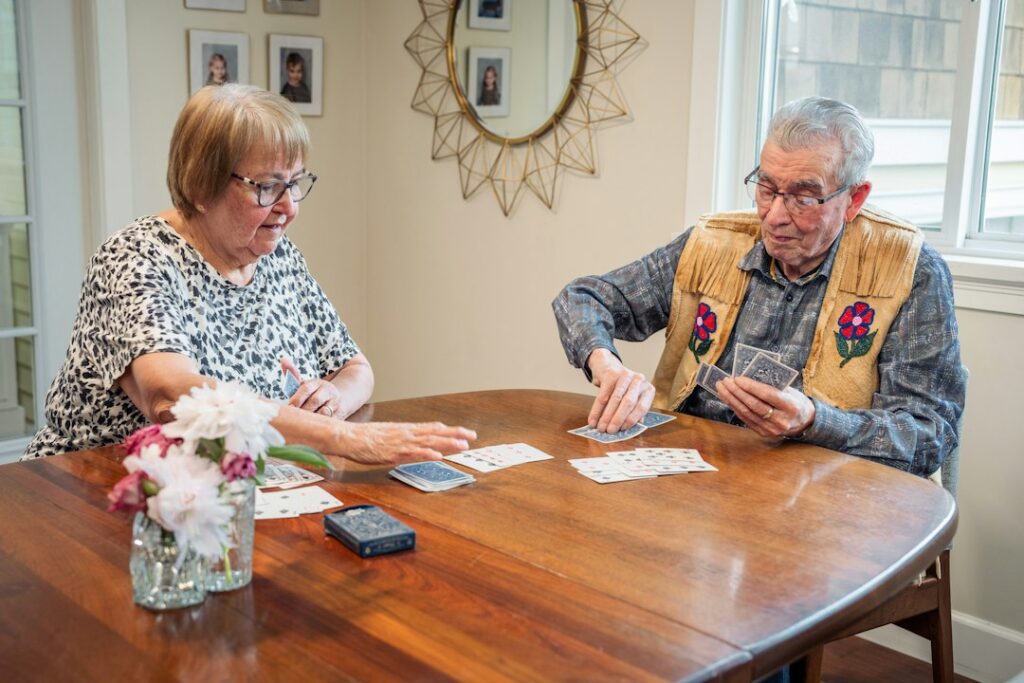
Why games and pastimes matter in assisted living
Games and pastimes offer more than entertainment. They can support memory, movement, conversation, confidence, and a sense of daily purpose for assisted living residents in Nazareth, PA.
A meaningful activity does not need to be complicated or competitive. Some residents enjoy familiar card games, while others prefer music, crafts, gardening, puzzles, gentle exercise, or quiet time with a book. The most successful activities usually match a person’s interests, abilities, energy level, and comfort with social settings.
Pastimes can also help create a natural rhythm to the day. A morning word puzzle, an afternoon card game, or an evening music session may give residents something pleasant to anticipate.
Which games are most popular with older adults?
Traditional games remain popular because they are familiar, easy to explain, and adaptable for different abilities. Common choices include:
- Rummy, Uno-style card games, and other simple card games
- Bingo with large-print cards and clearly marked numbers
- Checkers, dominoes, and matching games
- Scrabble-style word games with larger letters
- Crossword puzzles, word searches, and trivia
- Jigsaw puzzles with larger pieces
- Bowling-style tabletop games
- Beanbag toss and other seated target games
The best game depends on the resident. A person who once enjoyed bridge may appreciate a structured card group, while someone who dislikes competition may prefer cooperative puzzles or trivia played as a team.
Games should be adjusted rather than treated as all-or-nothing activities. Fewer cards, shorter rounds, larger pieces, simplified rules, or a partner who can assist may make participation easier.
Are games helpful for residents with memory loss?
Yes. Familiar, low-pressure games can be enjoyable for people living with memory loss, especially when the activity focuses on participation rather than winning.
Activities that use recognition, repetition, and sensory cues are often easier to follow than games that require several steps. Examples include sorting objects by color, matching pictures, identifying familiar songs, folding towels, or completing a simple puzzle.
A few useful guidelines include:
- Give one direction at a time.
- Use large, easy-to-see materials.
- Avoid correcting every mistake.
- Allow extra time for responses.
- Stop or change the activity if frustration develops.
- Emphasize conversation and enjoyment over scores.
Music-based games can work particularly well because familiar melodies may remain meaningful even when other types of recall become more difficult. Residents may enjoy guessing a song, singing along, identifying an instrument, or discussing memories connected to music.
What pastimes can residents enjoy alone?
Independent activities are valuable for residents who need quiet time, tire easily, or prefer smaller amounts of social interaction. Options may include reading, coloring, knitting, drawing, journaling, listening to music, watching birds, or caring for a small indoor plant.
Large-print books, audiobooks, simple magazines, and newspapers can make reading more comfortable. Residents with limited hand strength may prefer colored pencils, large-handled brushes, magnetic puzzles, or crafts that do not require precise finger movements.
Quiet pastimes can also be useful during periods when weather limits outdoor activity. Seasonal changes in the area, including cold temperatures, snow, rain, and shorter winter daylight, may make indoor options especially useful for maintaining a sense of routine.
Which activities encourage social connection?
Social activities are often most successful when they give people something to do while allowing conversation to develop naturally. Residents may connect more comfortably during a shared task than during an unstructured social gathering.
Good examples include:
- Group trivia about music, television, history, or local traditions
- Reminiscence circles focused on school days, work, holidays, or family customs
- Craft tables with simple seasonal projects
- Cooking demonstrations or no-bake food activities
- Group singing and rhythm activities
- Friendly card tournaments with flexible rules
- “Show and tell” sessions featuring photographs or meaningful objects
- Small discussion groups based on a short story or news topic

A group does not have to be large. Two to six participants may create a more comfortable setting for residents who are shy, hard of hearing, or easily overwhelmed by background noise.
How can physical activity become a pastime?
Gentle movement can be presented as recreation rather than exercise. Seated stretching, balloon volleyball, scarf movements, indoor walking, chair yoga, and light dancing may help residents move safely while enjoying music and companionship.
Activities should account for balance, vision, hearing, joint pain, fatigue, and any mobility restrictions. Clear walkways, stable chairs, appropriate footwear, and close supervision may be needed depending on the activity.
Outdoor pastimes can also be meaningful when conditions permit. A secure courtyard, patio, or walking area may support gardening, bird-watching, seasonal decorating, or simply sitting outdoors. During hot, icy, or stormy weather, indoor alternatives should be available rather than expecting residents to participate outside.
What makes an activity accessible and enjoyable?
Accessibility often determines whether a resident can participate independently. Helpful adjustments may include:
- Large-print instructions and game pieces
- High-contrast colors for cards, boards, and craft materials
- Good lighting without glare
- Chairs with arms and supportive backs
- Tables at a comfortable height
- Minimal background noise
- Clearly explained rules
- Shorter activity periods with breaks
- Materials that are easy to grip
Hearing loss can affect participation more than many people realize. Facing the resident while speaking, reducing competing noise, and repeating information calmly can make group activities more welcoming. Vision changes may require larger print, brighter task lighting, or tactile materials.
An activity should also respect personal preferences. Not every resident enjoys group games, crafts, or exercise. Choosing not to participate is different from being unable to participate, and residents should have access to quiet alternatives.
How should families choose games for a loved one?
Families can start with the person’s history rather than the latest activity trend. Ask what the resident enjoyed earlier in life, including hobbies, work-related skills, favorite music, sports, cooking, collecting, or social traditions.
A former gardener may enjoy seed sorting or arranging flowers. Someone who worked with numbers may like budgeting games or simple scorekeeping. A person who enjoyed travel may appreciate map activities, photo discussions, or themed music sessions.
Bring materials that are safe, familiar, and not overly complicated. A small photo album, favorite puzzle, large-print book, or knitting project may encourage conversation and comfort. It is usually better to offer one or two well-matched choices than a large collection that feels confusing.
The goal is not to keep every resident busy at all times. The goal is to provide opportunities for enjoyment, connection, movement, creativity, and personal choice throughout the day.
What if a resident refuses to join activities?
Refusal is common and does not always mean the resident is uninterested. The activity may be scheduled at a tiring time, feel too difficult, seem childish, or take place in a setting that is too noisy.
A gentle invitation may work better than pressure. A resident might first observe a game, help deal cards, choose music, water plants, or join for only ten minutes. Participation can grow after the activity becomes familiar.
If a resident who usually enjoys activities suddenly withdraws, the change may relate to pain, illness, depression, medication effects, poor sleep, hearing or vision problems, or difficulty understanding the activity. Families and care staff should pay attention to changes in mood and functioning rather than treating withdrawal as simple unwillingness.
The most enjoyable pastime is usually one that feels familiar, respectful, and achievable. In assisted living, games and activities are most valuable when they support the resident’s identity and preferences—not merely fill time.
